How Albertsons rebuilt trust in its A/B testing platform

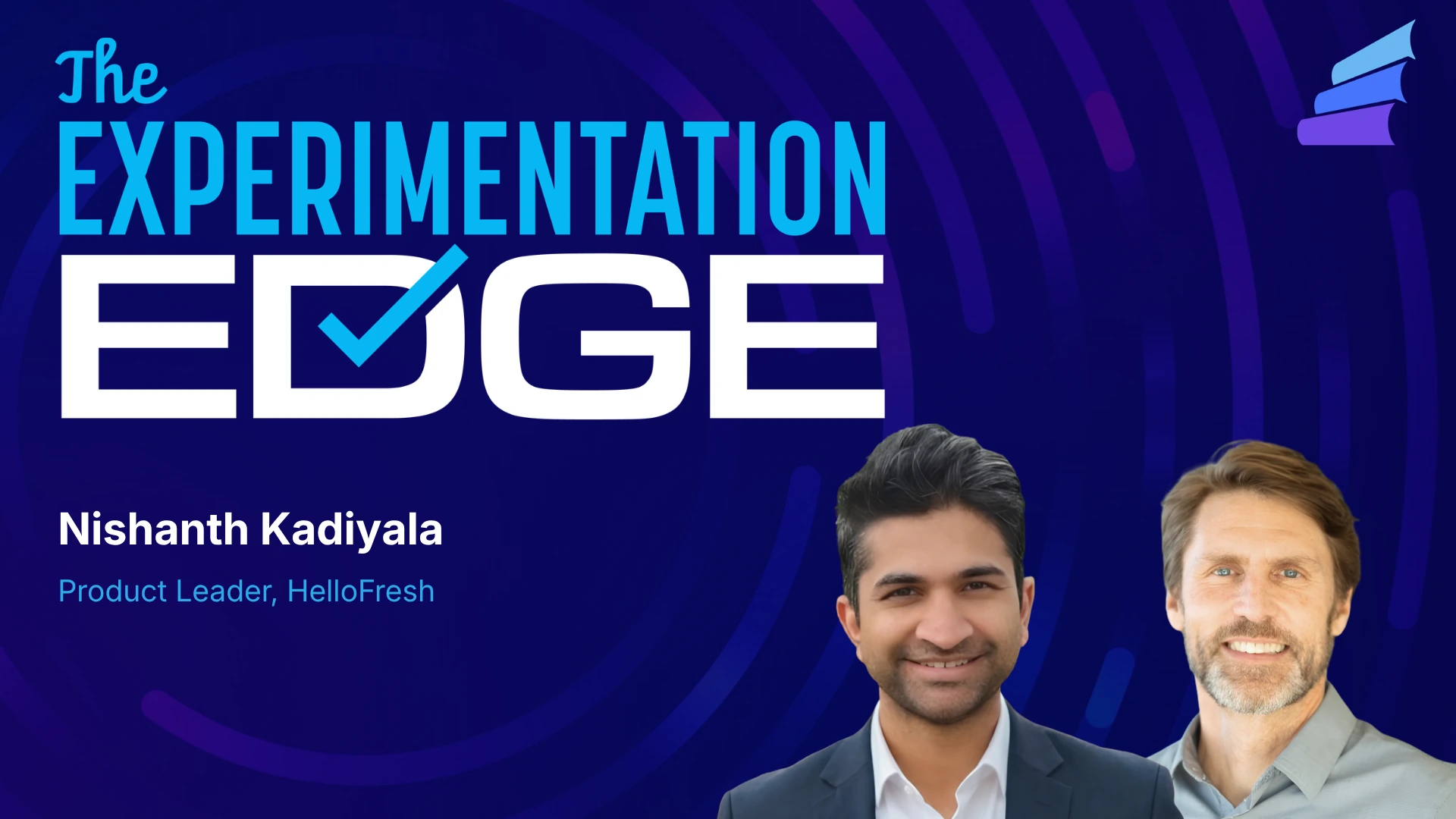
Every experimentation program rests on one assumption that rarely gets tested: that the platform is telling the truth. Mohan Dasannacharya, Director, Digital Product Management at Albertsons Companies, learned what happens when that assumption breaks, and what it takes to win back a company's confidence. On this episode of The Experimentation Edge, he shares the story with host Ashley Stirrup.
A career that followed experimentation
Mohan describes his path as a windy one. He started in physical design, earned a master's, did consulting, and joined eBay in UX design in the early 2000s, just as eBay was starting to experiment. At Shutterfly he handled the design side of experimentation, moved into product, and ran tests on both Adobe and Optimizely. At Albertsons he first led experimentation and the platform, and today he focuses on the analytics and experimentation platform itself.
That platform is now built in-house. Albertsons moved off Adobe Target, set up its own exposure data and tracking, and built a dashboard that shows every experiment that is running. Data scientists used to need about 7 days to run the numbers across all live experiments. Now the results land overnight and are ready to read in the morning, which has raised the velocity of the whole program.
Why grocery is different
Digital is not the largest share of revenue for a grocer, because people still like to go into stores. But it plays two roles: the online purchase itself, and the way shoppers use the app and site to clip coupons, find deals, plan store trips and build loyalty. Grocery is also a repeat-purchase business. “It's not like you're going to buy a different type of milk every time you go to the grocery store,” Mohan said. Shoppers add items straight from the product grid instead of opening a product detail page, and that shapes what Albertsons tests.
The biggest lesson: test the platform
A few years ago, Albertsons saw results that did not make sense. The team paused testing and ran A/A tests, where both arms get the exact same experience. The platform still declared winners. “That can't be possible,” Mohan said. The data science team and the vendors worked through the setup until the platform was balanced again.
Trust took longer to rebuild. For almost 2 years, Albertsons split every test into A, A and B. If the two A arms came back flat, the test was valid and the B could be judged against them. Mohan's advice is simple: “Periodically test your platform, because there is nothing that is there to confidently QA the platform itself.” With enough traffic, run a constant A/A test. Without it, run one every 6 months. Personalization makes this more important, because content and components can vary by audience in ways that make a variant look like a winner when it is not.
The plus button and the flat result
Mohan's favorite story is a test on the grocery grid. The team replaced the “add to cart” button with a small plus icon. Conversion was flat, the design freed up space, and the change shipped. Then conversion began to drift down. Digging into other metrics, the team found that more shoppers were opening product detail pages and adding items there. That pogo-sticking made each visit longer, so shoppers with a fixed amount of time added fewer items. When the button came back, behavior recovered slowly, a novelty effect in reverse, as Ashley put it.
The fix is to watch more than one number. Some platforms recommend whole-journey conversion and some recommend next-step conversion. “I don't think it's one or the other. You have to actually have both,” Mohan said. Next-step conversion from the grid to the cart would have shown the problem at the time.
He saw a similar lesson at Shutterfly. A known bug was left in a flow because it seemed minor. Once it was fixed, the test arm jumped 6 to 7%. Every bug can ripple through the results.
Design tests that teach you something
Albertsons has swung between running only carefully powered tests and running as many as possible. Mohan's balance: build a platform that can run as much experimentation as possible, and be deliberate about what goes on it. “Having a platform that can do experimentation doesn't mean that you use the platform as an answer,” he said.
Two practices help. First, measure exposure and impressions separately, so you know whether a shopper was eligible for a component and whether they actually scrolled to see it. Second, write down the expected lift before the test starts. If you expected 1% and got 0.1%, that is not a win, unless the change was one phase of a bigger design. “It's always important to have a baseline of what you're expecting, so that then you're not cherry-picking the data,” Mohan said. He also recommends an analyst team that is independent from the product owner, because it is too tempting to find the segment where your own feature wins. At eBay, he remembers 30 to 40 tests on the home page at once, and around 80% of them claiming victory.
What's next: democratized testing with guardrails
Albertsons wants more people to launch their own experiments from the dashboard. Mohan sees the opportunity and the risk: when testing is easy, people want to test everything. Platforms will need to manage conflicts, hold back tests that lack data or clarity, and balance the work of AI agents that set up experiments. People will still need to gatekeep.
Personalization also shrinks the audience for each test, so experiments must run longer. Power calculations up front help product and business teams accept that some results take months. If a team wants 100% exposure in 3 weeks, Mohan says, it may be better to ship without a test, because “you're not going to get a true result in 3 weeks.”
For a grocer, the payoff is an omnichannel experience where digital tools help people shop, in the store and online. Getting there starts with a platform the whole company trusts.

Get The Uplift in your inbox
Experimentation tips and a new game, once a month.

Related articles


Ready to ship faster?
No credit card required. Start with feature flags, experimentation, and product analytics — free.